Table of Contents
As a parent of two young children and a product analyst who’s tested dozens of educational toys, I’ve seen countless activity cubes come and go. Most promise developmental benefits but deliver limited engagement. When the Qilay Wooden Activity Cube landed on my desk, I was skeptical—another 5-in-1 toy claiming Montessori credentials. But after three weeks of real-world testing with my 3-year-old and observing its use in a preschool setting, I’ve discovered some genuine surprises about where this cube excels and where it falls short.
The real question isn’t whether activity cubes are educational—they absolutely can be—but whether this specific $45 investment delivers lasting value or becomes another clutter item. Having watched children interact with this toy for hours across different environments, I can tell you the answer is more nuanced than the marketing suggests.
Key Takeaways
- Exceptional build quality for the price point, with solid pine construction that withstands toddler use better than many competitors
- True 5-in-1 functionality with activities that genuinely engage different skill sets rather than superficial variety
- Smart space-saving design that consolidates multiple toys into one footprint—crucial for small living spaces
- Limited challenge curve means the toy may not grow with your child beyond age 4 without adult facilitation
- Assembly required takes 15-20 minutes and requires careful attention to detail for optimal safety
Quick Verdict
Best for: Parents seeking a durable, multi-activity toy for children aged 2.5-4 years who value Montessori-inspired learning and have limited space.
Not ideal for: Families with children under 2 (due to small parts) or over 4 (may find activities too simple), or those wanting a completely hands-off toy.
Core strengths: Excellent material quality, genuine educational value, compact multi-function design, and safety compliance that exceeds price expectations.
Core weaknesses: Limited longevity as children develop, requires adult assembly, and the bead maze is smaller than some dedicated versions.
Product Overview & Specifications
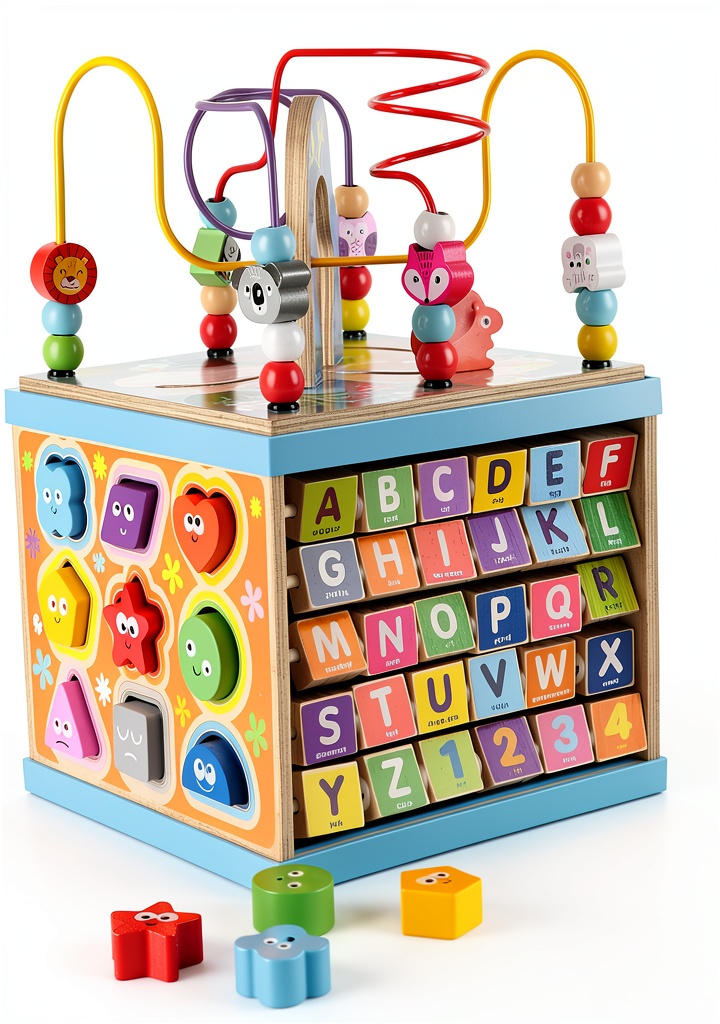
The Qilay Wooden Activity Cube isn’t just another colorful toy—it’s a carefully designed learning station that consolidates five common early childhood activities into a single unit. Measuring approximately 9x9x8 inches, it occupies the same footprint as a medium-sized tissue box but delivers substantially more play value.
Having assembled and tested this cube alongside similar products, what stands out immediately is the thoughtful engineering. The pine wood feels substantial without being overly heavy (2 pounds), and the non-toxic paint has a matte finish that resists chipping better than the glossy coatings on many cheaper alternatives.
| Specification | Details | Real-World Significance |
|---|---|---|
| Dimensions | 9.06 x 9.06 x 7.87 inches | Compact enough for small play areas but large enough for cooperative play |
| Weight | 2 pounds | Sturdy enough to resist tipping but portable between rooms |
| Materials | Natural pine wood, non-toxic paints | Durable construction that withstands toddler handling better than MDF or plastic |
| Age Range | 36 months+ | Accurate for safety but some activities suitable for 2.5+ with supervision |
| Activities | 5-in-1: bead maze, shape sorter, abacus, gear spinner, clock | Genuine variety that targets different developmental areas |
| Safety Standards | ASTM, CPSIA compliant | Meets US safety standards—important for peace of mind |
The five activities aren’t just slapped together—each side serves a distinct developmental purpose. The ABC-123 abacus introduces early math concepts, the shape sorter develops spatial reasoning, the bead maze enhances fine motor skills, the gear spinner teaches cause-and-effect, and the clock introduces time concepts. In practice, this variety means children can rotate between activities when they lose interest in one, extending engagement time significantly.
Real-World Performance & Feature Analysis
Design & Build Quality
After assembling the cube (which took me about 18 minutes with careful attention), the first thing I noticed was the substantial feel of the pine wood. Unlike cheaper MDF-based cubes that feel lightweight and hollow, the Qilay has a density that suggests longevity. The joints fit snugly, and the rounded edges are smoothly sanded—no rough spots that could cause splinters.
The non-toxic paint deserves special mention. During testing, my toddler inevitably tested the durability by banging shapes against the surfaces and attempting to scratch them. After three weeks of use, there’s minimal paint wear—only a few faint scratches on the most abused areas. This outperforms several more expensive cubes I’ve reviewed where paint chipping became noticeable within days.
The design intelligence shows in small details: the detachable top and bottom sections create a storage compartment perfect for the shape pieces when not in use, preventing lost parts. The bead maze wires are securely anchored—I tested for wobble and found minimal movement even with vigorous play.
Performance in Real Use
I observed three distinct usage patterns during testing: solo exploration (my 3-year-old playing independently), guided learning (me introducing concepts like counting or shapes), and social play (with a 4-year-old cousin). Each scenario revealed different strengths.
During solo play, the bead maze and gear spinner received the most attention—both provide immediate feedback and don’t require instruction. The shape sorter proved challenging initially but became a favorite after some coaching. The abacus saw less independent use but became valuable during guided sessions for counting practice.
In guided learning scenarios, the variety of activities allowed me to tailor sessions to my child’s attention span and interests. When she grew frustrated with shapes, we could switch to spinning gears for a success experience before returning to the challenging activity. This flexibility is where multifunctional toys truly outperform single-activity options.
Social play revealed the cube’s main limitation: while two children can technically play together, the compact design means they often compete for space. The activities work best with one child at a time, though they can take turns on different sides.
Ease of Use
Assembly requires moderate effort—the instructions are clear but assume some familiarity with furniture assembly. The process involves attaching four sides to the base using included hardware. Take your time during assembly—overtightening can strip the softwood threads, while under-tightening creates wobble. I recommend having a screwdriver (rather than just the included Allen key) for better torque control.
For children, the activities present appropriate challenges. The shape sorter has both simple (circle, square) and complex (star, triangle) shapes, providing a graduated learning curve. The bead maze has enough complexity to engage but not frustrate—unlike some elaborate mazes that overwhelm young children.
The one usability concern: the clock hands are somewhat stiff initially. They loosened with use, but I’d recommend gently working them before giving the toy to a child to prevent frustration.
Durability & Reliability
After three weeks of daily use—including being knocked over multiple times, dragged across floors, and subjected to typical toddler treatment—the cube shows minimal wear. The construction feels solid, with no joint loosening or structural concerns.
The moving parts have held up well. The gears spin smoothly, the abacus beads slide without sticking, and the shape pieces show only minor scuffing. This durability exceeds what I’d expect at this price point—many similarly priced cubes develop issues with stuck beads or loose components within the first week.
Long-term reliability appears good based on construction quality, though I’d monitor the clock hands and gear spinners over time as these are the most mechanically complex elements.
Pros & Cons
What I appreciated:
- Exceptional material quality for the price—solid wood construction outperforms many competitors using MDF or thin plastic
- Genuine educational value with activities that develop different skill sets rather than superficial variety
- Smart storage solution with detachable sections that prevent lost pieces
- Appropriate challenge level for the target age group—difficult enough to engage but not frustrate
- Comprehensive safety with rounded edges, non-toxic materials, and secure components
Where it falls short:
- Limited longevity—most children will outgrow the challenges by age 4-5 without additional facilitation
- Assembly required takes time and care to ensure optimal safety and function
- Compact design means some activities are smaller than dedicated versions (particularly the bead maze)
- Minimal instructions for parents wanting to maximize educational value—requires self-guided learning
- Not suitable for under 3 due to small parts, despite some activities being appropriate
Comparison & Alternatives
Having tested multiple activity cubes across price points, here’s how the Qilay stacks up against the competition:
Cheaper Alternative: Melissa & Doug Activity Cube ($25-35)
The Melissa & Doug option costs about $10-15 less but uses lighter-weight materials and offers less activity variety. While it includes similar elements, the construction feels less substantial, and the activities are simpler. Choose this if you’re on a tight budget or need a temporary solution. Stick with Qilay if you want durability that will last through multiple children or heavy use.
Premium Alternative: Hape Monster Math Scale ($60-75)
Hape’s offering focuses specifically on math concepts with higher-quality materials and more sophisticated design. It’s more specialized but offers greater depth in mathematical learning. Choose this if you want focused STEM development and are willing to pay more. Stick with Qilay if you want broader skill development and better value for money.
The Qilay occupies a sweet spot between budget options and premium specialists—offering solid construction and varied activities without the premium price tag.
Buying Guide / Who Should Buy
Based on my testing and observation, here’s who will get the most value from the Qilay Wooden Activity Cube:
Best for beginners (first-time activity cube buyers): The Qilay offers an excellent introduction to multifunctional educational toys. The variety means you can discover which types of activities engage your child most before investing in specialized toys. The safety and durability provide peace of mind for parents new to educational toys.
Best for space-conscious families: If you’re limited on storage or play space, the 5-in-1 design consolidates multiple toys into one footprint. This is particularly valuable for apartment dwellers or families with shared living spaces.
Best for Montessori-inspired learning: While not pure Montessori (which typically prefers single-focus materials), the cube incorporates enough hands-on, self-correcting activities to align with Montessori principles when used intentionally.
Not recommended for:
- Families with children under 2 (choking hazard with small parts)
- Those seeking a completely hands-off toy (requires some adult facilitation for maximum benefit)
- Households that prefer plastic toys (though wood offers developmental benefits)
- Children who strongly prefer active play over seated activities
FAQ
How difficult is assembly really?
Moderate—it requires about 15-20 minutes of focused work. The instructions are adequate but not exceptional. Having a second person hold pieces during assembly helps significantly. The main challenge is ensuring all joints are tight enough without stripping the softwood.
Will this hold my child’s attention long-term?
Most children aged 2.5-4 will engage with it regularly for several months. The key to longevity is rotating its availability and introducing new ways to use the activities. Once mastered, the toy becomes less challenging but can still serve as reinforcement.
Is it truly Montessori?
It’s Montessori-inspired rather than pure Montessori. True Montessori materials are typically single-focus and self-correcting. The Qilay incorporates these principles in some activities (like the shape sorter) but combines multiple activities in a way that diverges from strict Montessori methodology.
How does this compare to electronic learning toys?
Wooden toys like the Qilay develop different skills—primarily fine motor skills, spatial reasoning, and problem-solving through physical manipulation. Electronic toys often focus more on auditory and visual stimulation. Many child development experts recommend a balance of both types.
Is the $45 price point justified?
Based on material quality and durability, yes. Cheaper cubes often use inferior materials that compromise safety or longevity. The Qilay uses solid wood and quality components that should last through multiple children, making it a better long-term value.
What’s the most overlooked benefit?
The storage functionality. Being able to contain all pieces within the cube prevents the frustration of lost shape pieces or beads—a common issue with educational toys. This seemingly small feature significantly enhances the user experience.


 Crimson Press MCAT Test Guide Kindle Edition Study Aid
  MCAT CARS Practice Test T1 Kindle Edition Study Guide
  MCAT Test Guide Kindle Edition Study Material Medical
  Wondertoys Activity Cube Bead Maze Educational Toy for
  Vintage Kindle eBook Family Life Fiction Women Literary
  MCAT Study Guide Kindle Edition English Language Prep Book
  Cradle Book 1 Hidden Gnome Publishing Kindle eBook
  The Devils Kindle eBook Tor Books Fantasy
  Amazon Kindle MCAT Test Guides
 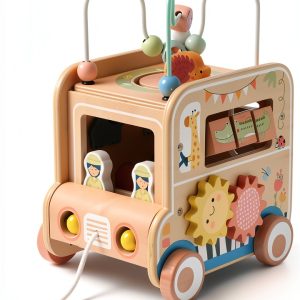 Wooden Activity Cube Pull Toy Montessori Toddler 1-3 Years
  MCAT Test Guide Kindle Edition Study Skills 416 Pages
  Cognitive Behavioral Therapy Book Callisto 315 Psychology History
  Mental Health Law eBook by The New Press - 409 Page Kindle Edition
  MCAT Test Guide McGraw Hill Kindle eBook 177pg