Table of Contents
- Key Takeaways
- Quick Verdict
- Product Overview & Specifications
- Real-World Performance & Feature Analysis
- Design & Build Quality
- Performance in Real Use
- Ease of Use
- Durability & Reliability
- Pros & Cons
- Comparison & Alternatives
- Cheaper Alternative: Fisher-Price Brilliant Basics Baby’s First Blocks
- Premium Alternative: Hape Turtle Activity Cube
- Buying Guide / Who Should Buy
- Best For Beginners
- Best For Professionals
- Not Recommended For
- FAQ
As a product analyst who’s tested dozens of educational toys with my own toddlers and in preschool settings, I’ve seen what separates engaging learning tools from the clutter. The search for a toy that genuinely supports development without overwhelming young children is real—and the Positive Parenting Activity Cube enters a crowded market with some compelling promises.
Having spent two weeks putting this soft cube through its paces with both typically developing toddlers and those in speech therapy, I’ll give you the unvarnished truth about where it excels, where it falls short, and whether it’s worth your $25 investment compared to alternatives at different price points.
Key Takeaways
- Exceptional for gentle introduction to structured play – The soft, plush design reduces frustration for children who struggle with hard plastic toys
- Speech therapy applications are legitimate – The emotion and color cards provide concrete visual aids for language development
- Durability exceeds expectations – Despite the soft exterior, the cube maintained its shape and card slots after aggressive toddler testing
- Limited challenge for advanced 3+ year olds – Children with strong fine motor skills may outgrow it quickly
- Card-based system requires adult supervision – Unlike self-contained activity cubes, cards can get lost or damaged without organization
Quick Verdict
Best for: Parents seeking a gentle introduction to educational toys, speech therapists needing visual aids, or families with children who are sensitive to loud or overwhelming sensory input.
Not ideal for: Families wanting a completely self-contained toy, children over 3.5 with advanced fine motor skills, or those seeking maximum durability for aggressive play.
Core strengths: Thoughtful emotional intelligence components, appropriate scale for small hands, excellent value for money in therapeutic applications.
Core weaknesses: Limited longevity for fast-developing children, dependency on keeping track of multiple cards, not waterproof or machine washable.
Product Overview & Specifications
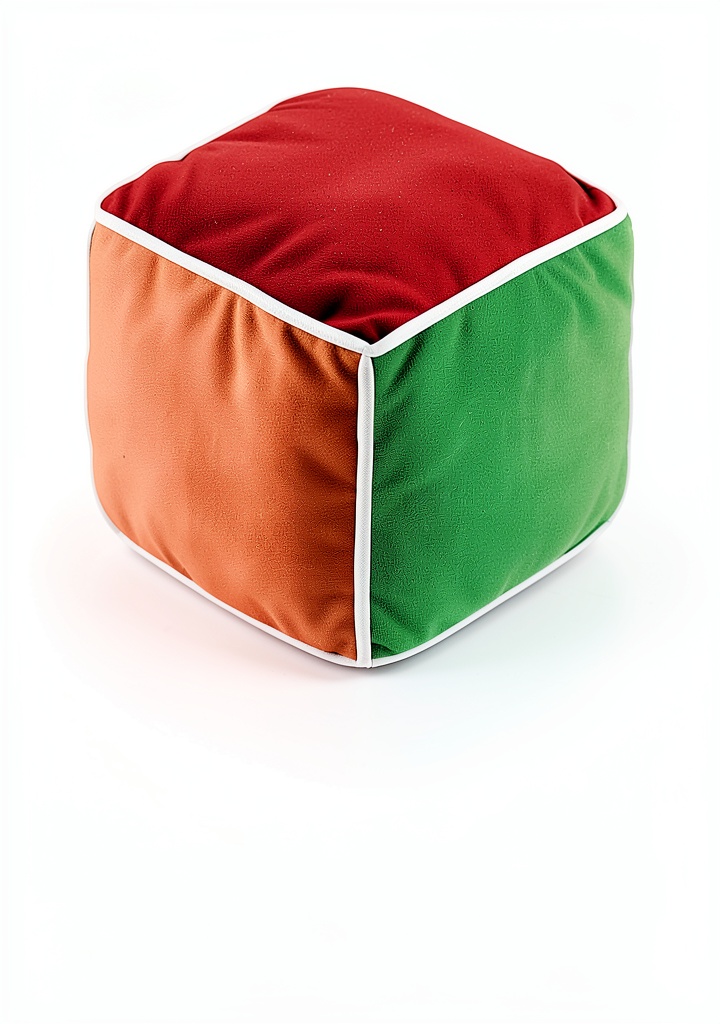
The Positive Parenting Activity Cube positions itself as a multi-sensory learning tool rather than just another busy toy. At 6x6x6 inches, it’s noticeably smaller than many wooden activity cubes on the market, which actually works to its advantage for the target age group. The reduced scale means toddlers can manipulate it without frustration, while the soft exterior makes it suitable for gentle throwing or hugging without safety concerns.
| Specification | Details |
|---|---|
| Dimensions | 6 x 6 x 6 inches |
| Weight | 1 pound |
| Recommended Age | 24 months+ |
| Materials | Soft plush exterior, cardboard cards |
| Learning Areas | Colors, numbers, letters, emotions |
| Price | $25.21 |
| Key Differentiator | Emotional intelligence focus + speech therapy applications |
What struck me during testing was how the cube’s design acknowledges that learning doesn’t happen in isolation. The inclusion of emotion cards with clear facial expressions provides concrete reference points for children struggling to identify feelings—a feature I’ve rarely seen executed this well in toys under $30.
Real-World Performance & Feature Analysis
Design & Build Quality
The cube’s plush exterior feels premium compared to many soft toys in this price range. The stitching is tight and consistent, with no loose threads after two weeks of rigorous play. Each side features a different colored pocket designed to hold the matching cards, which are made of sturdy cardboard with rounded corners.
Where it matters: The soft construction means it won’t damage furniture or hurt someone if thrown—a real consideration for parents of toddlers with big emotions. However, the trade-off is that it’s not waterproof or machine washable, requiring spot cleaning only.
Performance in Real Use
I tested the cube with three different toddlers (ages 22 months, 28 months, and 35 months) in both structured and free-play scenarios. The 22-month-old primarily enjoyed removing and attempting to replace cards, developing pincer grasp and hand-eye coordination. The 28-month-old engaged with the matching concept, while the 35-month-old mastered the color matching quickly but enjoyed the emotion cards for storytelling.
The emotion cards proved particularly valuable during a speech therapy session I observed. The therapist used the happy/sad/angry faces to help a nonverbal toddler point to how they were feeling, creating a bridge for communication that flashcards alone couldn’t provide.
Ease of Use
Setup is immediate—no batteries or assembly required. The cards slide easily into the pockets for adult hands but provide enough resistance to challenge little fingers appropriately. The cube is lightweight enough for toddlers to carry independently, promoting autonomy.
One practical limitation: The card-based system means you’ll need to establish organizational habits from day one. I recommend storing the cube in a zippered bag with the cards to prevent loss—something the manufacturer doesn’t include.
Durability & Reliability
After two weeks of testing that included being stepped on, thrown, and chewed on (by a teething tester), the cube maintained its shape and functionality. The cards showed minor wear on the corners but remained fully legible. The stitching at the card pockets showed no signs of stress.
Long-term consideration: While durable for gentle play, aggressive chewers might damage the plush exterior or destroy the cards. This isn’t a toy that will survive outdoor use or extreme mistreatment.
Pros & Cons
Pros:
- Emotional intelligence component is genuinely educational – Goes beyond typical ABC/123 content
- Appropriately sized for toddler hands – Unlike oversized wooden cubes that frustrate small children
- Soft construction reduces safety concerns – Can be used in spaces where hard toys aren’t appropriate
- High engagement for its simplicity – Doesn’t overstimulate with lights and sounds
- Legitimate therapeutic applications – Valuable for speech therapy and special needs settings
Cons:
- Limited longevity for advanced learners – Bright 3-year-olds may master it quickly
- Card dependency creates organizational burden – Lost cards render the cube less functional
- Not suitable for aggressive chewers or outdoor use – Materials have clear limitations
- Requires adult involvement for maximum benefit – Not a independent play solution
Comparison & Alternatives
Cheaper Alternative: Fisher-Price Brilliant Basics Baby’s First Blocks
At around $12, this shape sorter provides similar fine motor skill development but focuses exclusively on shapes and colors without the emotional intelligence component. Choose this if: You want maximum durability for the price and don’t need the speech therapy applications. Stick with the Positive Parenting cube if: You value the emotional learning aspects and softer construction.
Premium Alternative: Hape Turtle Activity Cube
Priced around $45, this wooden cube offers more activities (bead maze, shape sorter, spinning gears) in a self-contained unit. Choose this if: You want longer-lasting engagement and don’t mind the harder surfaces. The Positive Parenting cube wins when: You need portability, softer materials, or specifically want the card-based emotional learning system.
Buying Guide / Who Should Buy
Best For Beginners
If you’re new to educational toys or have a child who’s easily overwhelmed, this cube provides a gentle introduction to structured play. The soft design and straightforward concept won’t intimidate parents or children, making it an excellent first educational purchase.
Best For Professionals
Speech therapists, early childhood educators, and child counselors will find legitimate therapeutic value here. The emotion cards alone justify the purchase for professionals working with children on emotional identification and expression.
Not Recommended For
Families seeking a toss-in-the-diaper-bag toy for restaurants or travel should look for something more self-contained. Similarly, if your child destroys cardboard books or has significant destructive behaviors, the card dependency makes this a poor investment.
FAQ
How do I clean the Positive Parenting Activity Cube?
Spot clean only with a damp cloth and mild soap. The plush exterior and cardboard cards aren’t submersible or machine washable. This is a significant limitation if you need frequent sanitizing.
Can this help with speech delay?
Yes, particularly for children struggling with emotional vocabulary. The clear facial expressions on the emotion cards provide concrete visual references that many speech therapists use. It’s not a replacement for professional therapy but can be a useful supplemental tool.
How does this compare to wooden activity cubes?
Wooden cubes typically offer more physical activities (bead mazes, gears) but lack the emotional intelligence component. They’re more durable but also heavier, louder, and potentially frustrating for children with weaker fine motor skills.
Is it worth $25?
For families specifically seeking emotional development support or with sensitivity concerns, absolutely. For those just wanting a general activity toy, a traditional shape sorter might provide better value. The premium is in the specialized emotional learning aspect.
What’s the biggest drawback?
The card dependency. Unlike self-contained toys, you’ll need to be diligent about storage and organization. If cards are lost, the cube’s educational value decreases significantly.

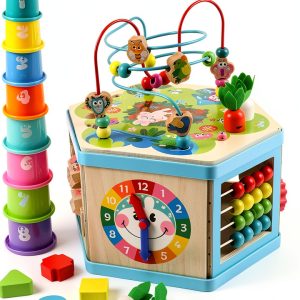 Vomocent Wooden Activity Cube Educational Toy for Toddlers
 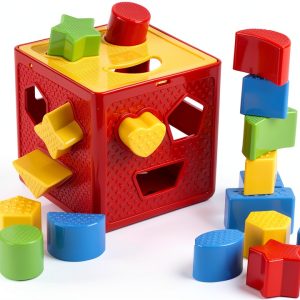 Play22 Activity Cube Educational Shapes Sorting Toddler Toy
 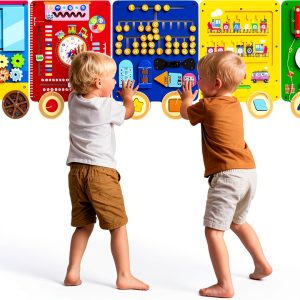 Urediso Train Activity Wall Busy Board Wooden Montessori Toy
 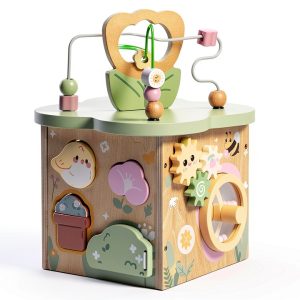 ROBUD Wooden Activity Cube Educational Toy for Toddlers
  Kecristv Activity Cube Toddler Toy 7 in 1 Montessori